
Public Lecture: “We've Come This Far! Aging Control: Considering the Latest Research and Its Impact on Our Lives”
On February 15th, as part of the “Longevity Technology (Ageing Control Technology)” initiative, which forms one pillar of Project CHANGE's activities, we held a public lecture for citizens. Innovative research findings can sometimes lead to excessive expectations among citizens or, conversely, cause fear and confusion. Therefore, communication is needed to foster sound, progressive ethical perspectives and literacy, known as ELSI (Ethical, Legal and Social Issues). This symposium provided a forum to consider the societal implementation of scientific and technological advancements in aging control, which have the potential to impact daily life. Despite being held on a Sunday afternoon, the symposium attracted 75 attendees. It featured keynote speeches by leading cell aging researcher Prof. Akiko Takahashi (Cancer Institute, University of Tokyo Faculty of Pharmaceutical Sciences) and Prof. Nobuyuki Shirakawa (Niigata University), an expert on ELSI. This was followed by a panel discussion expanding on the keynote topics. Professor Takahashi provided a highly accessible explanation, ranging from fundamental questions like “What exactly is a senescent cell?” to molecular biological insights into how senescent cells respond to the body's elimination mechanisms. Professor Shirakawa presented case studies addressing ethical and institutional frameworks concerning humanity's desire to resist aging, emphasizing the need for discussion in this field where regulatory science is still insufficiently developed. The panel discussion featured Nikkei Biotech Editor-in-Chief Fumiko Kubota, Mr. Shiragasawa from Astellas Pharma's Advocacy Department, and Tokyo University of Science graduate student Miriu Miyatsu. They debated topics raised by the keynote speakers. Regarding the highly intriguing technology of “age control,” Professor Takahashi stated that while this technology, if matured, could undoubtedly overcome many age-related diseases and enable more people to live independently, there is currently no established evidence for either its efficacy or safety, so it should be approached cautiously. Mr. Kubota and Mr. Shirakawa, both knowledgeable about the pharmaceutical industry, expressed agreement with this view. Professor Takahashi's statement that “removing senescent cells could cause some adverse events” was recognized as a warning to society and a very weighty remark.
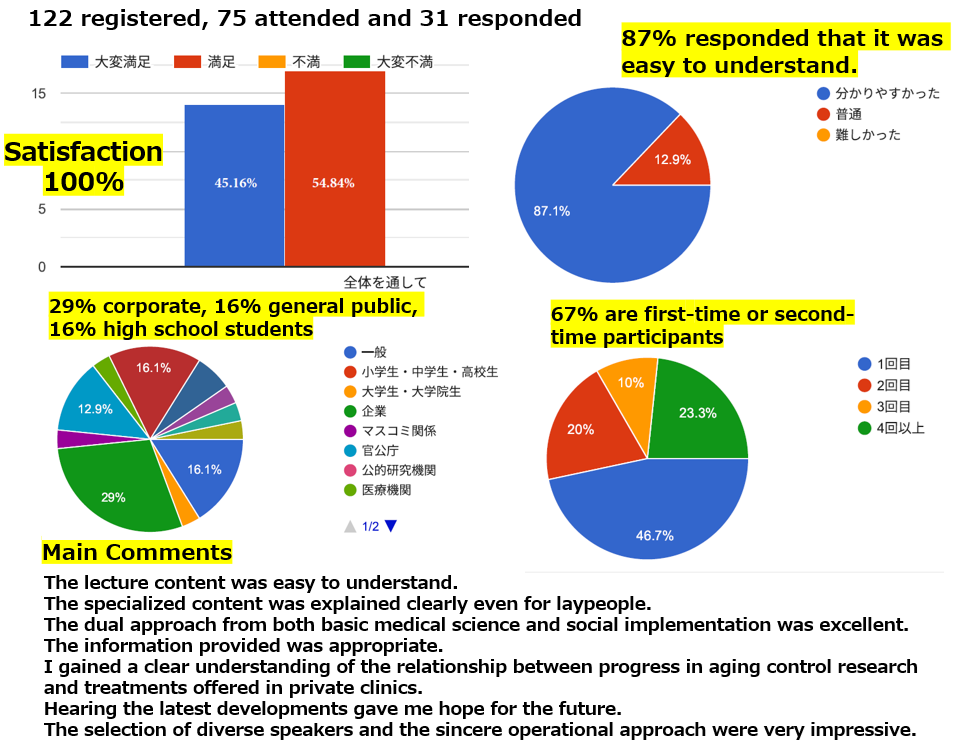
The following is a summary of the survey results.