Concrete Research Activities
(Research Themes)

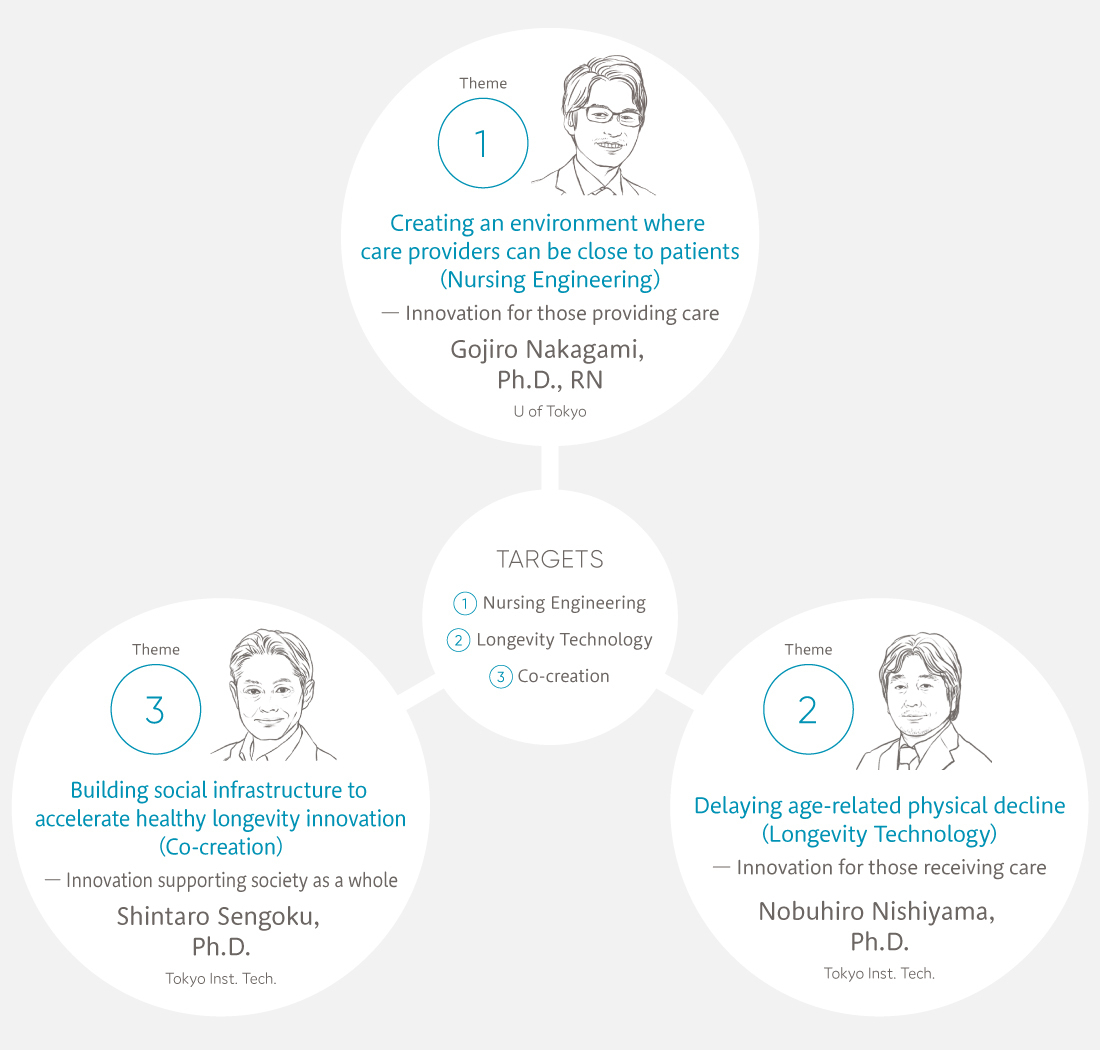
3 Targets, which we are aiming for
-

Creating a care environment where nurses can be close to patients
(Innovation on the Care Provider Side)

We define “Nursing Engineering” as an interdisciplinary engineering field that integrates technologies from engineering, information science, and data science, starting from challenges encountered daily in nursing practice. Its goals are to reduce nurses' workload, support accurate decision-making, and improve the quality of care. This field is designated as R&D Theme 1, playing a key role in the project. The declining birthrate and aging population have led to a nursing shortage, increasing nurses' physical and mental strain. The excessive burden of documentation tasks has also become a serious issue, contributing to a higher risk of errors in their work. Meanwhile, many nurses wish to dedicate more time to the direct nursing tasks they should focus on—understanding patients, showing empathy, and assessing situations. We believe the ideal approach is not to replace everything with engineering technology, but rather to preserve the essence of care that should be provided by people, while engineering supports the surrounding processes. To achieve this, we encourage engineering researchers to engage in “shadowing”—where new nurses observe and learn the techniques and judgment of senior nurses from behind—to identify challenges based on a deep understanding of the field. Through close collaboration with the Kawasaki Nursing Association, we have established a system where frontline voices are directly heard. This enables rapid evaluation of developed prototypes and the collection of practical feedback. We are working alongside the field to create technologies that support the future of nursing.
-
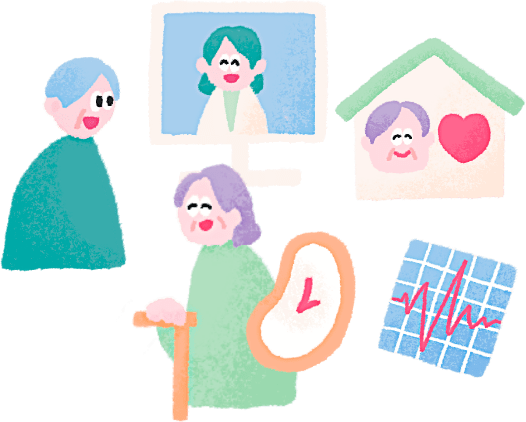
Delaying physical decline due to aging
(Innovation for the care recipient)
Within our bodies, cells called “senescent cells” gradually increase. These cells have lost their ability to divide and multiply, preventing cells with damaged genes—caused by UV rays or chemicals—from becoming cancerous. It has been discovered that if senescent cells remain in the body, they negatively impact surrounding cells, leading to decreased physical strength and muscle mass, increased fatigue, and the progression of frailty. If we can identify these senescent cells early and remove them as needed, we can potentially prevent bodily decline and maintain vitality for longer. Early detection and removal of senescent cells also help preserve walking ability and daily living functions, reducing the risk of becoming bedridden. Consequently, this extends the period during which individuals can live independently, promising an increase in healthy life expectancy. This research hub is also developing technologies to counteract aging (longevity technologies), defining this as R&D Theme 2. Advances in the latest medical and engineering technologies are making a future where changes within the body are gently monitored and support provided when needed a reality. Approaches targeting senescent cells represent a crucial step toward realizing a society where everyone can live with peace of mind as they age.
-
Building social infrastructure to accelerate healthy longevity innovation
(Social Infrastructure Innovation)

As mentioned above, this center is advancing various research initiatives involving both care providers and care recipients. Technologies that reduce operational burdens and enable high-quality care, along with new forms of support tailored to each individual's health status and lifestyle, are expected to significantly contribute to people maintaining independent lives for longer—that is, extending healthy life expectancy. However, for such innovations to truly take root as valuable assets in society, technological development alone is insufficient. The process of integrating new care models into people's daily lives inevitably involves challenges such as ethical considerations, alignment with existing systems, and fostering social understanding and consensus. For example, concerns about data handling and privacy, psychological resistance to technology, disparities among users, and incompatibilities with existing systems can all become barriers to public acceptance of new initiatives. Confronting these challenges head-on and carefully resolving them is essential to ensure innovation benefits society as a whole, rather than remaining the preserve of a select few. We have defined this as R&D Theme 3, aiming for innovation in social infrastructure. Implementing innovation in a way that provides reassurance and satisfaction for both “care providers” and “care recipients.” This requires a mindset that embraces a cross-cutting perspective encompassing technology, systems, ethics, and society, engaging in ongoing dialogue to co-create the future. Only through such efforts can the goal of extending healthy life expectancy be sustainably realized within the realities of society.
3 Research and Development Themes